

In addition to profiting off the brutalisation of workers across semiconductor supply chains, the microprocessor firm Intel has also long been a key strategic partner to the state of Israel. These ties have only grown since the start of the genocide in Gaza, prompting workers to take action. This is a broad description of the semiconductor industry, followed by an account of organising at Intel.
Semiconductors — such as silicon, germanium, gallium, etc. — are elements around the centre of the periodic table. Their unique physical properties allow them to switch between insulating and conducting electricity, making them the foundation of all computing today; the fundamental building block of mobile devices, personal computers, servers, data centres, cloud computing, AI, and everything else imaginable.
The semiconductor industry is global, featuring both firms that focus on specific segments of the supply chain and those that handle end-to-end production. This heterogeneity makes it rather challenging to understand the industry and to identify the different actors and regimes of exploitation. This article will discuss a few components of semiconductor supply chains; we urge everyone to use these as pointers for further research and education.
The very first phase of manufacturing, often not even described as such, is the extraction of resources, of minerals as raw materials. Silicon is the most common such element used in chip production due to its wide availability; it is generally mined from open-pit mines in Latin America, West Africa, and Australia. It then undergoes several stages of purification and refinement in facilities around the world, many of which are in China. Two alternatives to silicon, often used for specialised high-frequency, low-noise applications are gallium (as GaAs) and germanium (as SiGe). The production of gallium, a by-product of bauxite mining in Guinea, India, Indonesia, Brazil, and several other countries, generates large volumes of chemical waste. This mining, which has resulted in the destruction of forests, livelihoods, and ecosystems, has long been opposed by indigenous groups. Other prominent mined materials include copper, cobalt, and aluminium, all of which are used for wiring and interconnections on semiconductor chips. The global supply chains that mediate the extraction of these minerals ultimately obfuscate the extent of exploitation and environmental distress at the point of extraction.
After the crystallised minerals travel to manufacturing facilities worldwide in wafer form, the semiconductor industry’s major players begin to get involved. The next steps can be broken down into two major phases: design and manufacturing. Firms that do both design and manufacturing are known as Integrated Device Manufacturers (IDMs). Some examples of IDMs include Intel, NXP, Infineon, STMicroelectronics, Analog Devices, Samsung, SK Hynix, and Micron. There are also firms that restrict their activities to either design or manufacturing. Prominent design-only corporations — so-called fabless manufacturers, such as Nvidia, Qualcomm, Apple, AMD, Marvell, and Broadcom — each have their own specialised design areas; they do not, however, manufacture their own chips. That task is instead left to another group of firms, known as foundries, which specialise in fabricating chips. The two main firms here are TSMC and GlobalFoundries; Rapidus is a newer Japanese firm trying to break into the market. Some IDMs, such as Intel and Samsung, also function as “custom” foundries, manufacturing chips for their fabless customers.
The design phase of production, as the name suggests, involves designing circuits and their interconnections to optimise chip performance and power consumption. Given that chips are made of millions of components, this phase depends heavily on electronic design automation tools. That is where firms such as Cadence, Synopsys, and Siemens come into the picture. These firms occupy a niche market position, developing specialised automation software tools and Intellectual Property cores for use by both IDMs and fabless design firms. In most cases, the design problems addressed here are very traditional computer science-adjacent geometric optimisation problems. Yet this area has recently experienced a major push towards integrating artificial intelligence, and as in many other fields of work, the motivation for this push on the part of management is simply “everyone else is doing this”.
The so-called front-end phase of manufacturing uses design masks with nanometer-level precision to create circuitry on circular wafers. This phase is often the most resource-intensive in the production system. In the first place, the lithography machinery used in this phase — manufactured mostly by firms such as ASML, ASM or Applied Materials — is highly technologically advanced and expensive. Second, operating an average-sized fabrication facility also requires huge amounts of electricity and around 35 million litres of water per day; resource consumption levels comparable to those of a medium-sized town. These facilities also require acres of land, which are generally exempted from land and property taxes due to strategic industrial zoning.
Altogether, this industry has a significant environmental and economic impact on surrounding communities. Chemical waste, including condensed vapours, are emitted into the atmosphere; water shortages are also a serious concern, even though a large portion of the water used by these facilities is intended for recycling. The costs associated with this recycling process are prohibitive. Its effectiveness, which depends upon factors like resource availability, local regulations, and ecological restrictions, is also far from guaranteed. People living near these facilities also often experience utility service disruptions and frequent rate hikes. And even though these facilities tend to have far higher electricity and water consumption than their neighbours, they often pay rates that are significantly subsidised. Colluding with city, state, and federal governments, corporations are often offered preferential access to resources, tax breaks, and opportunities for further land acquisitions. A perfect example of these concerns is Intel’s presence in Hillsboro, Oregon, which many community organising groups have recently been fighting against.
In addition to these issues, this industry also lacks adequate labour regulations. An example of this is Foxconn, a major manufacturer of iPhones and other electronic gadgets. Already known for their poor working conditions in China, Foxconn has recently expanded its facilities to the outskirts of Bangalore in southern India. These facilities employ large numbers of dormitory-dwelling migrant workers, who are subjected to gruesome working conditions, with little regard for worker protections or rights. Ultimately, because the adverse effects of this industry are experienced by a large section of workers and communities across a diversity of geographies, there is an opportunity for a commonality to emerge: for workers and local organizations to sense the similarity of the forces arrayed against them and, thus, the unity of their struggle; and for solidarity to be extended outside the boundaries of a single facility or location and across the borders of nation states.
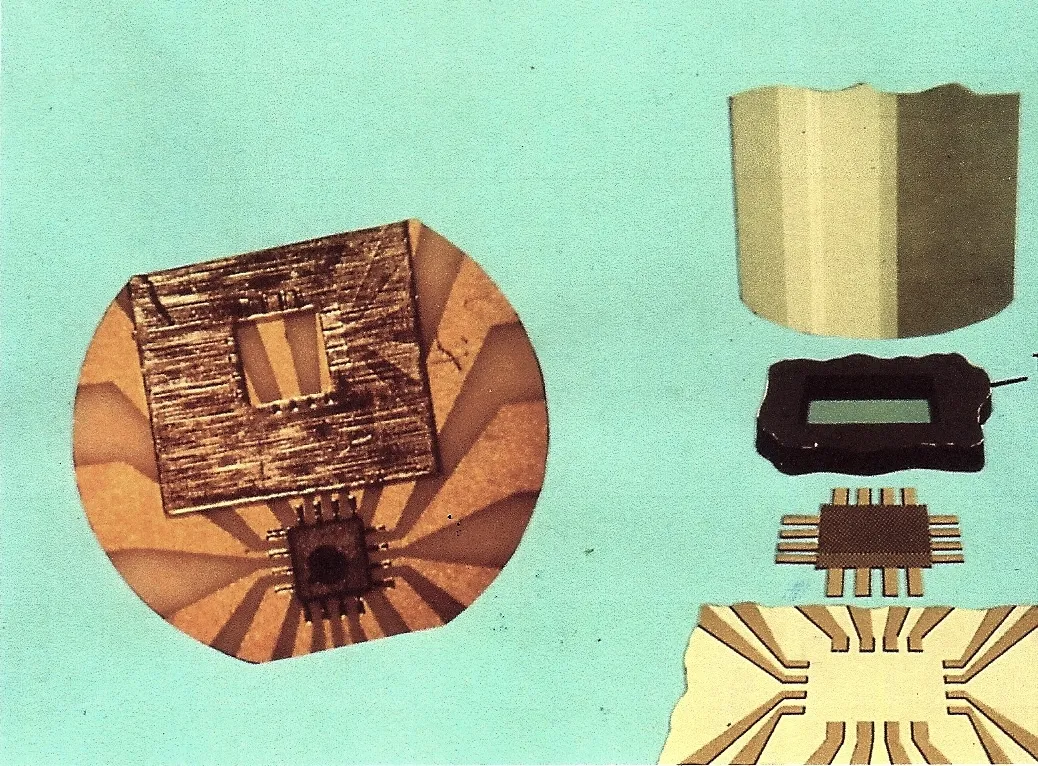
Finally, the last phase of manufacturing, often referred to as the back-end phase, involves cutting the wafers into specific sizes, followed by testing and packaging chips as finished products. This phase is often carried out by another group of firms known as Outsourced Semiconductor Assembly and Test firms, such as Amkor, KYEC, ChipMOS, and ASE. On the whole, back-end manufacturing is less resource-intensive than the front-end phase; the more immediate issue here is labour conditions. The work required — wiring, testing, assembly, and packaging — often takes place in South and Southeast Asia. Corporations take advantage of large pools of labour, poverty, corruption, and almost non-existent labour laws in peripheral geographies to squeeze out surplus value from workers in any way they can.
Production ends when chips enter the circuits of consumption, becoming part of our phones, computers, or online services. This poses a challenge: how can we demystify the products and services we receive as context-less objects, fetishised commodities separate from the labour and the raw materials that have gone into making them?
We — a group of current and former Intel employees — began trying to answer this question, coming together under the name United Chips Against Global Exploitation, or simply UNCAGE. We felt a particular sense of urgency after Israel’s relentless bombardment of Gaza began, given Intel and Big Tech’s prominent economic and material involvement in the occupation of Palestine, and now in genocide. This is not to say that we were ever naïve enough to believe these corporations genuinely cared about the high humanitarian values they espoused. But even the thin pretence afforded by codes of conduct and DEI initiatives was now melting away.
In the context of Palestine, Intel has long been a key contributor to Israel’s apartheid economy, accounting for almost 2% of the occupying state’s GDP. The firm’s very first overseas location was established in Haifa in 1974; its presence in Israel has only grown since. Today, Intel is the largest tech employer in the country, employing over 50,000 individuals, either directly or indirectly. 17% of these are actively serving in the IDF reserve force. In 2022, the firm’s Israeli branch had exports worth $9b, and received a historic $50b in investment. Fab28, one of Intel’s biggest fabrication facilities since 2008, is located in Kiryat Gat: formerly a Palestinian village known as Iraq al-Manshiyya, only 32 kilometres north-east of Gaza. Even under the 1947 UN Partition plan, a plan that was highly favourable to occupying Zionist forces, this village would legally be part of a Palestinian state. In 1948, the village was home to more than 2,000 Palestinians, who were ethnically cleansed by Israeli forces during the Nakba, despite a truce that was supposedly in effect. This is where Intel, who claims to “conduct business with honesty and integrity”, chooses to build its factories.
After October 2023, Intel’s hypocrisy became impossible to ignore. Pat Gelsinger, the CEO at the time, made a dramatic live appearance on the firm’s website, almost in tears as he expressed his pain for Israelis; the “most resilient people on Earth”. In the following months, as we bore witness to one of the most brutal genocides the world has ever seen, Intel announced an additional $25b of investment in expanding the Kiryat Gat fab facility. Seeing Israel’s Minister of Finance — the West Bank settler Bezalel Smotrich — use Intel’s investment as political validation was deeply upsetting.
Intel’s workers tried to engage with company executives using regular channels. They met with HR, the legal department, and government affairs teams. The company did not respond. During Intel’s annual Q&A, employees asked what it would take for Intel to reconsider investments that violate human rights. The norm at these Q&As has been for employees to vote on questions and for the CEO to answer the highest-ranking ones; this year, this question was deliberately skipped, despite receiving the most votes. This was when our group started to follow the lead of fellow tech workers at Google, Microsoft, Amazon, Meta, and others. We established ties with the BDS campaign, in order to pressure the company from the outside and to stress the economic damage their activities in Israel could cause.
Consequently, on 15 April 2024, there were protests at several Intel campuses — Hillsboro, OR, Chandler, AZ, AND Santa Clara, CA.1 Demonstrators, partnering with community organisations, demanded Intel’s divestment from the Israeli state. An employee resigned in order to draw attention to Intel’s lack of response. We also supported efforts by employees and investors to launch a shareholder campaign — an “ethical impact assessment” proposal asking Intel to address its values and clarify the moral implications of its decisions. The board recommended shareholders vote against this proposal, stating that the company’s humanitarian commitments have always been upheld, and that any reevaluation of Intel’s activities in Israel would be economically ill-advised.
Ultimately, we at UNCAGE wanted to build on worker politicisation in the context of the genocide and expand our consciousness-building work to the entire industry. Here, we were confronted with a number of challenges. For one, we found that the scope of consumer pressure was limited, since semiconductor firms technically deliver intermediate products and not consumer products. In addition, worker fragmentation posed a serious difficulty. Fabrication facilities, for instance, tend to feature highly disconnected, hierarchical structures, with workers divided across many roles — engineers, technicians, cleanroom operators, and so on — each with a different relationship to the work process and to management, as well as a different degree of leverage and vulnerability. Many technicians, for example, are hired as temporary contractors, making it harder to include them in employee-driven campaigns. Finally, the constant loss of core organisers due to layoffs, combined with the visa precarity faced by migrant workers, also presented serious hurdles.
Despite these difficulties, there have been small victories. A few months after they first announced the plan, Intel suspended the $25b investment in the Kiryat Gat facility.2 Although they cited economic reasons for the suspension, it is clear that pressure from our campaign also played a part. A few months later, one of Intel’s Hillsboro campuses cancelled an annual “family event” at the very last minute, fearing protests that would expose its complicity. And in 2025, the shareholder proposal organised by workers gained almost 10% of the vote, despite the board’s recommendation. The proposal is meant to be presented again, in slightly altered form, at this year’s shareholder meeting in May.3
There is still a long way to go, however, and it is important to underscore that if we are to organize effectively, we cannot confine our activities to particular locations or to specific firms and entities. The semiconductor industry relies on a global web of dependencies and interconnections that we must be able to understand and organise across. This was our motivation for constructing a broad map of the semiconductor economy in this article. If we are to be capable of standing against the interests of capitalists and imperialists, we will need far more unity across and between the industry’s various vertices.4
Notes
-
1. Nicholas LaMora, “Activists demonstrate at Intel’s Hillsboro campus in protest of Israel factory expansion”, Hillsboro News Times, 16 April 2024; Dylan Wickman, “Intel’s support of Israel protested at Chandler campus”, Arizona Republic, 17 April 2024.
-
2. Tobias Mann, “Intel interrupts work on $25B Israel fab, citing need for ‘responsible capital management’”, The Register, 10 June 2024.
-
3. Intel Corporation, “Form 8-K Current Report”, United States Securities and Exchange Commission, 6 May 2025.
-
4. Workers and community members interested in organising with us can reach us at uncage_united@proton.me.